
Neurotoxins for Natural, Relaxed Facial Movement
Softening expression lines while keeping your face looking like you.
Dysport® and Xeomin® are tools. Experience and judgment determine the result.
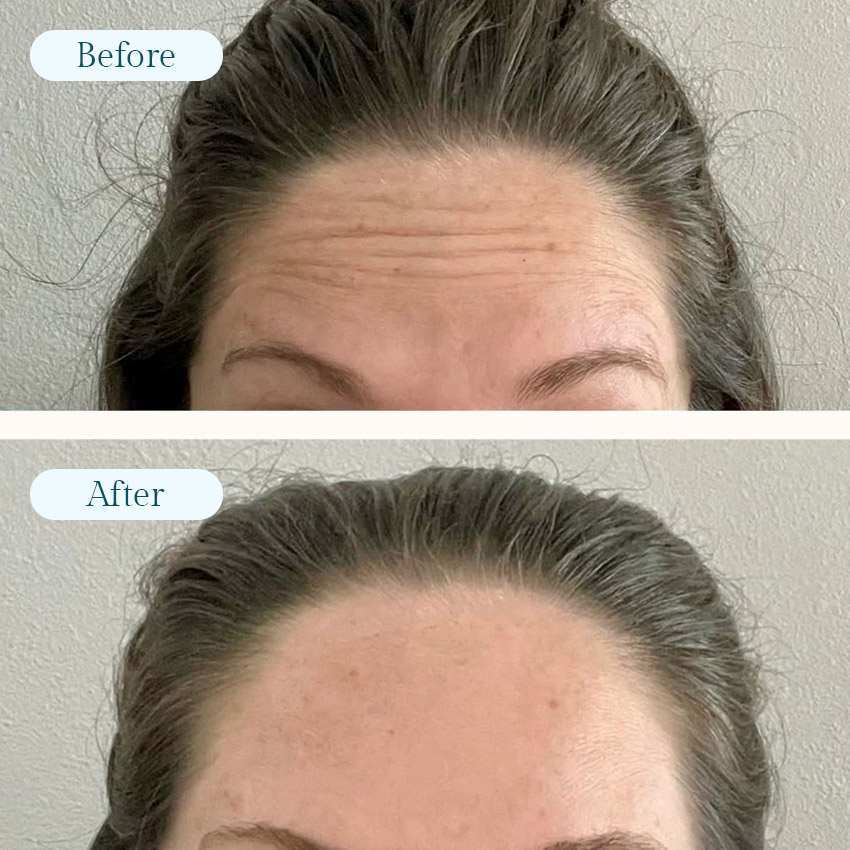
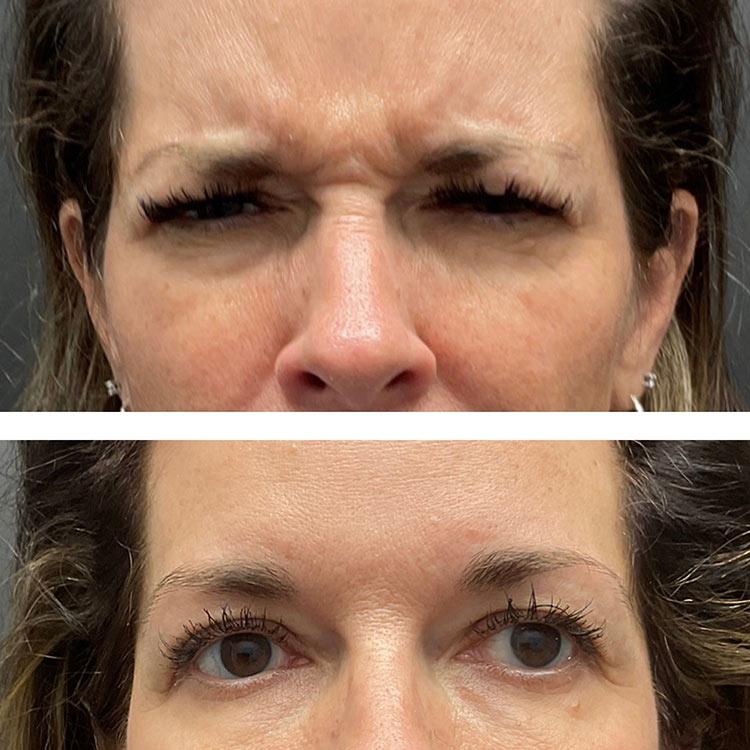
Neurotoxins are one of the most well-known treatments in aesthetic medicine, but they are also one of the most misunderstood. When used thoughtfully, they soften lines created by facial movement while preserving natural expression. At Interface Aesthetics, neurotoxins are used with intention, whether the goal is subtle softening or a more relaxed, smoothed appearance in specific areas. The goal: results that feel balanced, natural, and aligned with your preferences.
What Neurotoxins Do
A treatment designed to gently relax specific facial muscles.
Neurotoxins, also called injectable neuromodulators, help soften expression lines by temporarily relaxing targeted facial muscles. These are the lines that appear when you frown, raise your eyebrows, or squint, for example. Over time, repeated facial movement can cause those lines to remain visible even when your face is at rest. Neurotoxins help soften that process by reducing the strength of the muscle contraction that creates the line in the first place. When used carefully and in the right areas, the result is not a frozen face. The result is less tension in the areas that tend to crease the skin
A large part of Whitnie’s approach is education. She takes the time to explain how neurotoxins work, what they can realistically achieve, and how to avoid the overdone results often seen in today’s industry.
Specializing in Natural Results
Answers to Frequently Asked Questions
Why People Choose Neurotoxins
Neurotoxins are Often the first treatment people explore in aesthetic medicine.
Many people start considering neurotoxins when expression lines begin to linger longer than they used to. Over time, those changes can make the face look more tired or tense, even when you feel well rested. People often explore neurotoxins for:
- Lines that remain after facial expressions relax
- Vertical lines between the brows
- Horizontal forehead lines
- Crow’s feet around the eyes
- A desire to look more rested
- Bunny lines (nose wrinkles)
- Lip lines (sometimes called smoker’s lines)
- Chin dimpling
Some choose a very small adjustment. Others treat a few areas more evenly. The goal is always the same: a natural result that fits your face.
How Neurotoxins Are Used at Interface Aesthetics
Experience matters. So does restraint.
Neurotoxins are widely available, but natural-looking results depend heavily on the person performing the treatment. Dysport® and Xeomin® are all neuromodulators, but the product is only one part of the outcome. What matters just as much is how it is used, how your face moves naturally, and whether treatment makes sense for you in the first place.
Whitnie Padron, APRN approaches neurotoxins with nearly 20 years of experience in dermatology and aesthetic medicine. Every treatment begins with a careful assessment of facial movement, not just where lines appear. Some patients need only a small amount of product in a few specific areas, while others benefit from a more balanced approach. The goal is always the same: to soften lines without taking away natural expression. Sometimes the best decision is to do less, wait, or not treat at all.
Who Neurotoxins Are Best For
A good fit for people who want to look like themselves, just more rested.
Neurotoxins may be a good fit for people who:
- Notice certain lines are starting to stay even when your face is at rest
- Want to look more relaxed or less tired
- Prefer subtle changes over obvious ones
- Value a conservative, experienced approach
- Want honest guidance about whether treatment makes sense for you
For many patients, neurotoxins become part of a long-term approach to aging naturally and maintaining balance over time.
When Neurotoxins May Not Be the Right Choice
Not every concern is caused by muscle movement.
Neurotoxins are specifically designed to address lines caused by muscle activity. They do not correct every type of wrinkle or facial concern. For example, deeper lines caused by volume loss or skin texture changes may respond better to other treatments such as fillers, lasers, or regenerative therapies.
Some people also expect neurotoxins to eliminate every line on the face. That is not a realistic or natural goal. Facial movement is part of how we communicate and express ourselves. During your consultation, Whitnie Padron, APRN will explain what neurotoxins can realistically accomplish and whether they make sense for your goals.
Rewards Programs for Neurotoxins
Save on treatments you already plan for.
Dysport® patients can join ASPIRE Rewards, and Xeomin® patients can join Xperience+, both offering points and occasional promotions.
If you're interested, Whitnie Padron, APRN can walk you through how they work and help you decide if it makes sense for you.

Call or text us with any questions.
(727) 542-3586
What to Expect with Neurotoxins
Whitnie's Approach
- Neurotoxin treatments are typically quick and straightforward. The appointment begins with a conversation about your concerns and a careful evaluation of how your facial muscles move.
- Treatment itself usually takes only a few minutes. Most people return to normal daily activities right afterward.
- Results gradually appear over several days as the targeted muscles relax. The softened appearance typically lasts several months before movement slowly returns.
- Mild redness or swelling at the injection site can occur but typically resolves quickly.
- The most important part of the process is not the injection itself. It is understanding your goals and making careful decisions about what will look natural for you.
Schedule Your Neurotoxins Consultation
A conversation first. Treatment only if it makes sense.
Your neurotoxins consultation is a chance to ask questions, understand how treatment works, and find out whether it makes sense for your face and goals. Whitnie will assess facial movement, explain what is realistic, and be honest about whether treatment is appropriate or if something else would be a better fit.
Call or text us with any questions.
(727) 542-3586